Mongolia Unveils 2027 Draft Budget with MNT 27.9 trillion Revenue Target
 Ч.Сумъяабазар
09 сарын 24, 2026

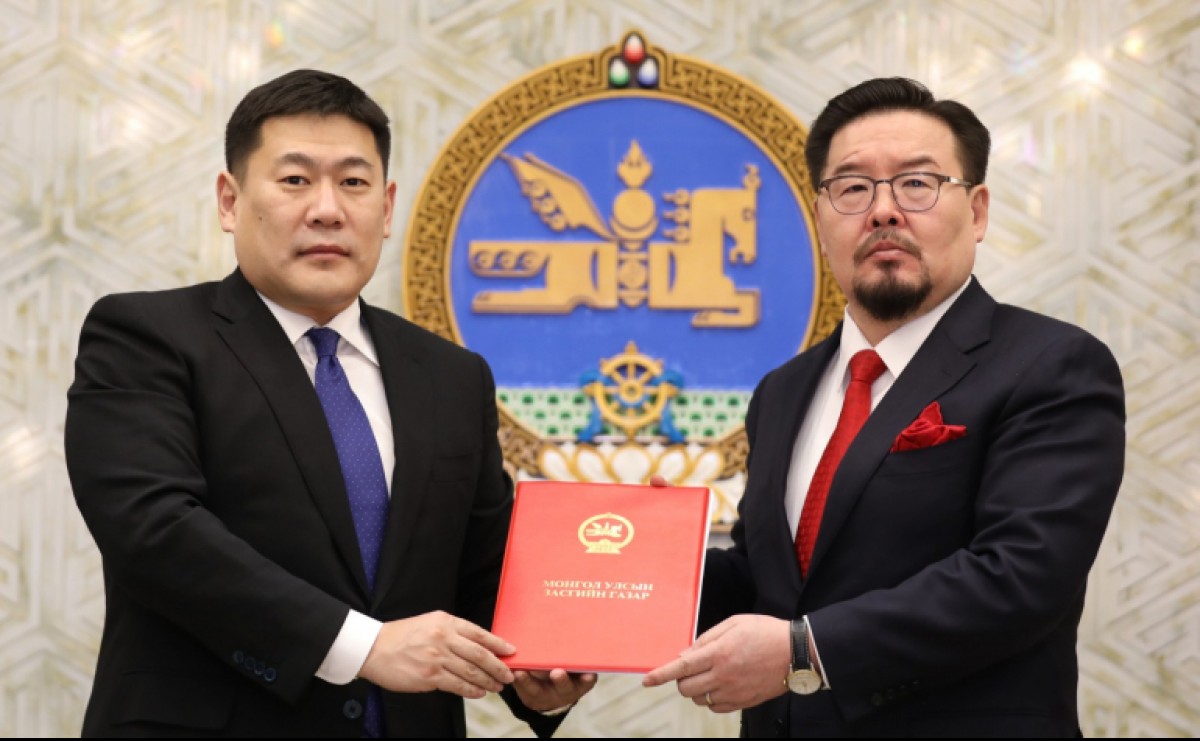
ULAANBAATAR, Mongolia — The Cabinet of Mongolia has submitted the draft law on the 2027 State Budget to the State Great Khural (Parliament), setting out the country's revenue, expenditure, and fiscal targets for the 2027 financial year.
According to the official draft legislation submitted by the Government of Mongolia, total balanced revenue for the 2027 fiscal year is projected at MNT 27.94 trillion.
Regional Revenue Contributions and Subsidies
The financial framework highlights stark fiscal disparities across Mongolia's administrative regions, detailing which areas contribute net surplus to the central treasury and which rely on state subsidies:
Top Revenue Contributors: Mineral-rich and economically central provinces generate the bulk of local revenue transfers to the central state budget. Mining hubs such as Umnugobi province and Orkhon province (home to the Erdenet Mining Corporation), alongside the capital city Ulaanbaatar, serve as the nation's primary net contributors, transferring hundreds of billions of togrog in corporate, mining royalty, and property tax revenues directly back into the central government accounts.
Primary Subsidy Recipients: Conversely, predominantly rural, agrarian, or remote provinces with smaller industrial bases require significant state fiscal support. Provinces in the far west and east—such as Bayan-Ulgii, Gobi-Altai, Khovd, and Sukhbaatar—are earmarked as top recipients of central budget transfers and allocations from the Local Development Fund to bridge local budget deficits and ensure essential public service delivery.
Key Revenue Highlights
Under the provisions of the draft bill, key state institutions and ministries are set to gather substantial revenue contributions:
Ministry of Finance: Led by the Minister of Finance, state revenue collection under this portfolio is targeted at MNT21.05 trillion, driven primarily by MNT12.06 trillion from the General Taxation Authority and MNT8.39 trillion from the General Customs Agency.
Fiscal Stabilization Fund: A total allocation of MNT483.75 billion is budgeted to be set aside into the Fiscal Stabilization Fund to cushion the national economy against external commodity price shocks.
Prime Minister's Portfolio: Expected to generate MNT6.55 trillion, largely through state-owned asset management via the Agency for Policy Coordination on State Property.
Ministry of Industry and Mineral Resources: Targeted to collect MNT398.03 billion, with MNT347.13 billion originating from the Mineral Resources and Petroleum Authority.
Government Expenditure & Allocations
The draft outline details public spending plans across social welfare, education, infrastructure, and debt servicing:
Education: The Minister of Education commands the largest operational portfolio expenditure at MNT7.54 trillion, comprising MNT6.21 trillion in current operational costs and MNT1.33 trillion in capital investment.
Family, Labour, and Social Welfare: Allocations total MNT6.10 trillion, focusing heavily on social security and welfare programs.
Finance & Debt Servicing: Total spending under the Ministry of Finance stands at MNT5.30 trillion. Crucially, this includes MNT1.57 trillion dedicated strictly to debt interest payments, along with MNT1.77 trillion in expenditures funded through foreign loans and aid assistance.
Infrastructure & Transport: The Ministry of Road and Transport is earmarked for significant capital spending, accounting for MNT1.46 trillion, of which MNT1.42 trillion is allocated directly to capital construction and infrastructure works.
Law Enforcement & Defence: The Ministry of Justice and Home Affairs has been allocated MNT1.99 trillion, while the Ministry of Defence receives MNT1.08 trillion.
Parliamentary Process
The draft bill—formally initiated on August 31, 2026—is currently proceeding through the multi-stage parliamentary review process at the State Great Khural, where lawmakers will debate, review, and finalize the expenditure and revenue figures before bringing the bill to a final vote.
Source: https://d.parliament.mn/tusul/e2ce7745-9966-414d-bd53-e9df85b4e2d2
Санал болгох