COP17: City Mayors Demand Direct Climate Cash at UN Summit in Mongolia
 Ч.Сумъяабазар
08 сарын 21, 2026

ULAANBAATAR, Mongolia — City leaders gathered at the United Nations desertification summit in Ulaanbaatar have issued an urgent plea to international donors, warning that the world’s rapidly expanding urban centers are running out of time to shield their populations from extreme climate events, soil degradation, and severe water scarcity.
Addressing journalists at a joint press conference on August 21 during the UN Convention to Combat Desertification (UNCCD COP17), municipal leaders and urban networks argued that local governments remain dangerously underfunded despite standing on the front line of the global land crisis.
The briefing followed the opening sessions of the COP17 Mayors’ Forum, a dedicated three-day summit bringing together city chiefs, municipal authorities, and regional leaders in the Mongolian capital.
Speaking on behalf of the host city, Mr.B.Purevdagva, Mayor of Ulaanbaatar, told reporters that local authorities are struggling to manage the compounding impacts of rapid urbanization and severe environmental degradation.
The Urban Frontier of Land Degradation
For decades, desertification and land degradation were viewed primarily as rural or agricultural challenges. However, city leaders at COP17 emphasized that urban areas are increasingly bearing the brunt of ecological collapse.
In Mongolia, extreme weather patterns—including harsh winter storms known locally as dzuds followed by summer droughts—have forced tens of thousands of nomadic herders to abandon traditional pastoral life and migrate to Ulaanbaatar. The capital city now houses nearly half of the country’s 3.4 million citizens, putting immense strain on municipal infrastructure, water networks, and green spaces.
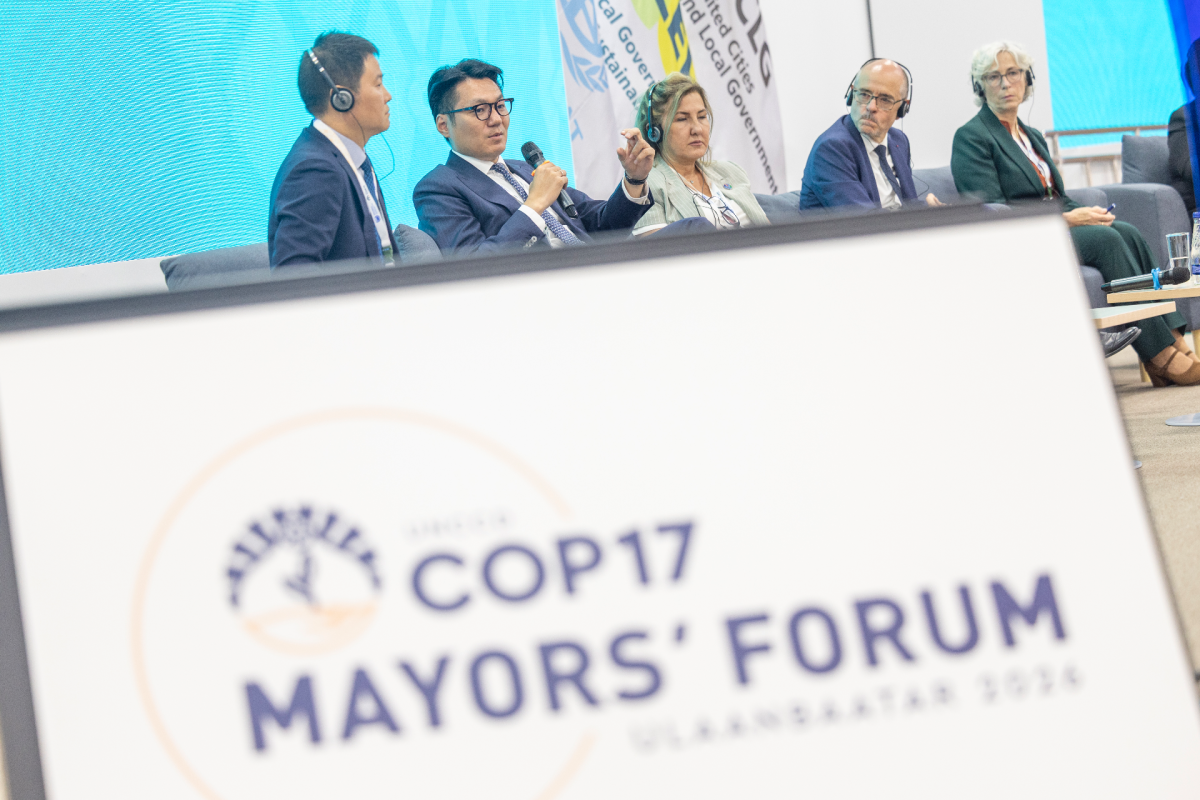
"Cities can no longer be treated merely as passive recipients of environmental distress or downstream pollution," Mayor Purevdagva said during the press briefing. "Urban centers are where land loss, water stress, and demographic pressures intersect. If we fail to build resilience in our municipalities, we risk systemic failure across whole regions."
The challenge extends far beyond Central Asia. Representatives from local government networks, including ICLEI – Local Governments for Sustainability and the Global Taskforce of Local and Regional Governments, highlighted that over 55 per cent of the world's population currently resides in urban areas—a figure projected to rise to nearly 70 per cent by 2050.
From sand and dust storms suffocating cities in East Asia and the Middle East to catastrophic flash flooding caused by degraded watersheds surrounding Latin American and African metropolises, municipal leaders warned that rural land degradation inevitably becomes an urban crisis.
Demands for Direct Finance
The primary sticking point for municipal leaders at COP17 is access to international climate and environmental development funds. Under current global governance frameworks, the vast majority of multilateral funds—such as the Global Environment Facility (GEF) and the Green Climate Fund (GCF)—are allocated directly to national ministries.
City networks argue that bureaucratic bottlenecks and centralized decision-making often prevent capital from reaching local authorities who are executing projects on the ground.
"Municipalities are tasked with managing land-use planning, municipal water systems, urban forestry, and disaster prevention, yet less than ten per cent of global climate finance directly reaches local governments," said a spokesperson for the Global Taskforce during the briefing. "We are asking for a fundamental restructuring of how environmental finance is channeled, ensuring subnational governments have direct access to investable capital."
Delegates at the Mayors' Forum called for:
Direct Funding Streams: Fast-tracked financial mechanisms allowing city administrations to access international climate funds without multi-tiered national bureaucracy.
Multilevel Governance: Formal inclusion of local government representatives in national delegations and integrated spatial planning frameworks under the UNCCD.
Urban-Rural Watershed Management: Coordinated investments between urban centers and surrounding rural regions to preserve soil integrity, manage river basins, and prevent drought-induced forced migration.
City-to-City Knowledge Sharing: Enhanced technical partnerships between cities in the Global South to deploy Nature-based Solutions (NbS), such as urban green belts and permeable infrastructure.
The Ulaanbaatar Declaration
The press briefing served as a precursor to the expected adoption of the Ulaanbaatar Declaration on Local Leadership for Land Resilience, set to be signed at the conclusion of the Mayors' Forum on Saturday.
The declaration aims to formally link municipal commitments to the broader targets of COP17, which is operating under the overarching theme "Restoring Land, Restoring Hope." Participating mayors hope the document will pressure national negotiators to explicitly recognize subnational authorities in the final decisions negotiated in Ulaanbaatar’s Blue Zone.
As negotiations enter their second week, local leaders insisted that national commitments to restore one billion hectares of degraded land worldwide will remain unfulfilled promises unless cities are given the tools to act.
"The battle against land degradation will be won or lost in local communities," Mayor B.Puredagva concluded. "We are calling on world leaders meeting here in Ulaanbaatar to give municipal authorities the voice, the seat at the table, and the financial resources required to protect our common future."
Холбоотой сэдвүүд
cop17 cop17 mongolia зуд улаанбаатар пүрэвдагва шар шороон шуурга
Санал болгох