COP17: Mongolia Highlights Value of Protected Lands at Nature Pavilion
 Ч.Сумъяабазар
08 сарын 22, 2026

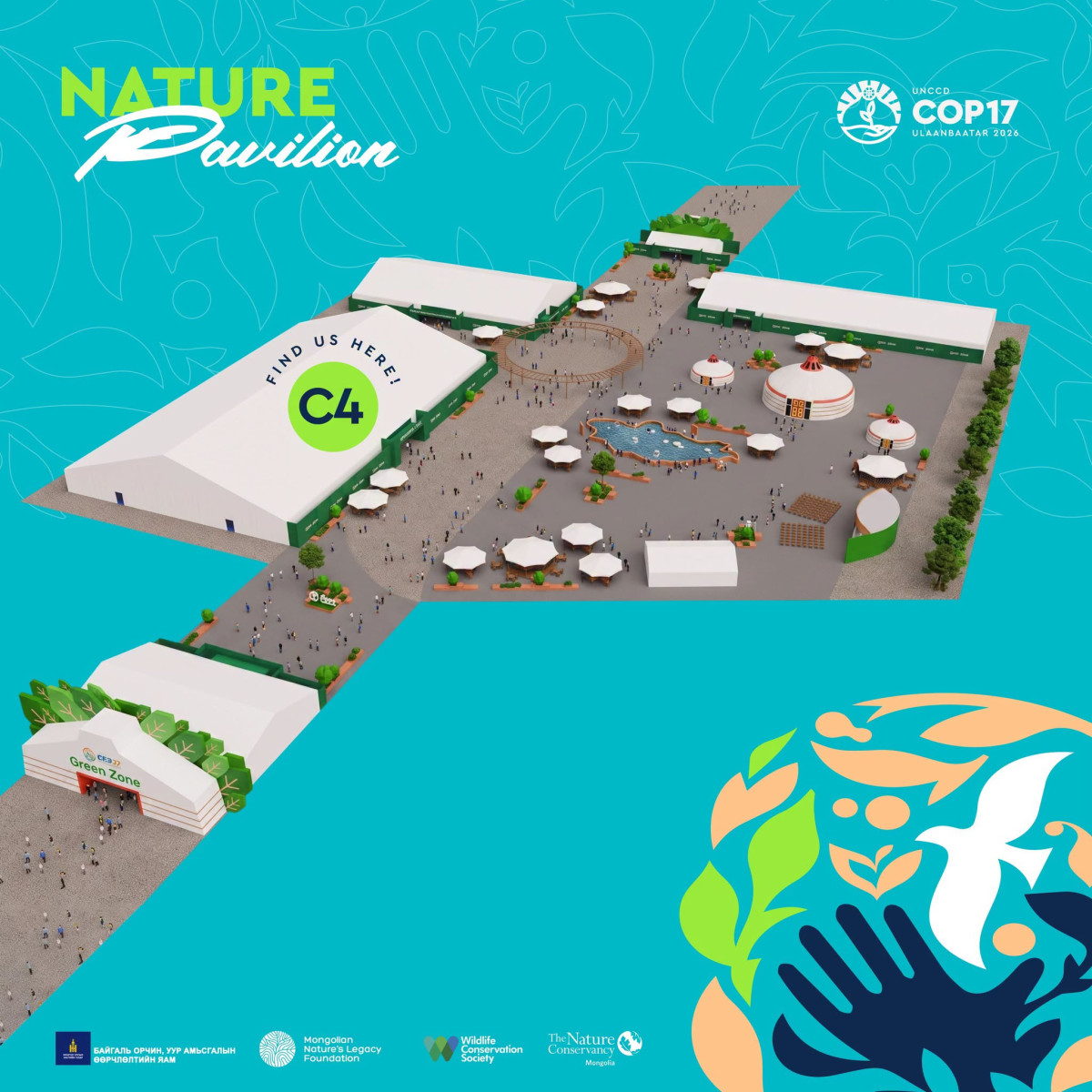
ULAANBAATAR, Mongolia — A full-day conference highlighting the ecological value and ecosystem services of Mongolia’s protected lands has taken place at the "Nature" Pavilion, part of the Green Zone activities for the upcoming 17th Conference of the Parties to the UN Convention to Combat Desertification (UNCCD COP17).
The event was designed to deepen public awareness regarding the country's protected territories while serving as a strategic venue for policymakers, international organisations, and local stakeholders to discuss sustainable finance, legal reform, and participatory management.
The forum was co-hosted by the Department of Protected Area Policy under the Ministry of Environment and Climate Change, the Mongolian Natural Heritage Trust, The Nature Conservancy (TNC) Mongolia, and the "Eternal Mongolia" Project Coordination Unit.
Key Takeaways
COP17 Green Zone Event: Forum showcases the national and economic value of Mongolia's protected ecosystems.
Legal & Strategic Policy: Government presents draft updates to the Law on Special Protected Areas alongside an international cooperation.
Wildlife Corridors: New partnership signed to build ecological migration passages and reduce infrastructure disruption.
Ranger Platform: Frontline conservationists share real-world challenges on climate change and human impact.
National Security and Sustainable Development
Opening the event alongside S. Amgalanbaatar, board member of the Mongolian Natural Heritage Trust, Minister of Environment and Climate Change Ts.Sandag-Ochir underlined that protected areas are vital to food, water security, climate resilience, and local livelihoods.
"The protection of special territory is not merely a matter for the conservation sector. It is directly tied to Mongolia’s sustainable development, national security, and the natural heritage we hand down to future generations."
— Ts. Sandag-Ochir, Minister of Environment and Climate Change
During the morning session, officials introduced proposed revisions to Mongolia’s Law on Special Protected Areas, alongside a strategic roadmap designed to align national policies with global biodiversity goals. Minister Sandag-Ochir noted that the legislative updates aim not only to expand protected geographical boundaries, but also to guarantee effective management, long-term financing, science-backed decision making, and community-led conservation.
A panel session brought together key global and domestic partners—including the German Agency for International Cooperation (GIZ), the International Union for Conservation of Nature (IUCN), UNESCO, TNC, and local national park authorities—to address management challenges and opportunities for joint action.
Pact Signed for Wildlife Migration Corridors
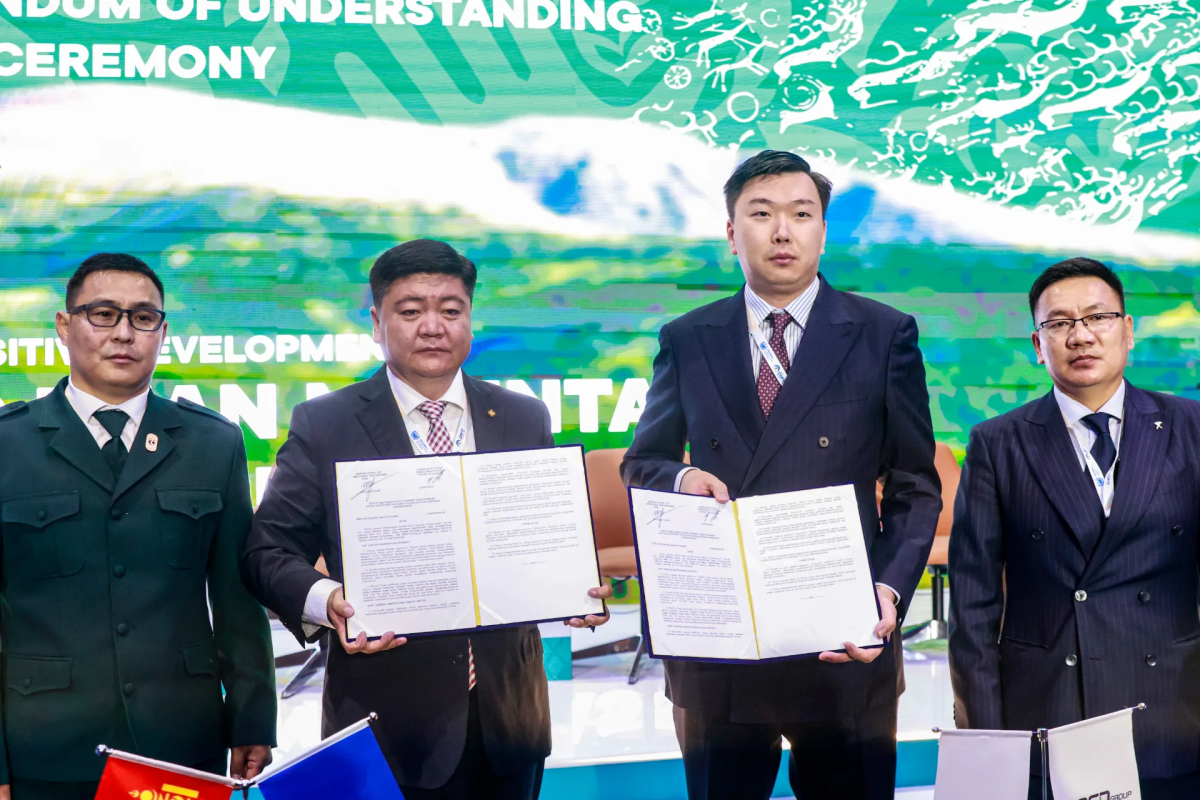
A key milestone at the pavilion was the signing of a Memorandum of Understanding between the Bogdkhan Mountain Strictly Protected Area Administration and NCD Group LLC to construct specialized ecological corridors for migratory wildlife.
The initiative seeks to reconnect fragmented habitats, enabling wild animals to navigate safely around linear transport and energy infrastructure.
Commending the initiative, Minister Sandag-Ochir described the agreement as a practical example of corporate social responsibility in nature preservation. He added that environmental protection cannot be achieved by government bodies alone, requiring ongoing collaboration between park authorities, rangers, local residents, civil society, and private enterprise.
Voices from the Frontline
The event also provided a platform for park rangers working on the ground. Frontline personnel shared insights into their daily routines, outlining the growing threats posed by severe climate change, illegal human encroachment, and resource constraints.
Throughout the day, park authorities representing Khan Khentii, Bogdkhan Mountain, Small Gobi, Lake Khuvsgul, Hustai, Ikh Nart, and Gorkhi-Terelj presented successful conservation models—ranging from peatland protection and wildlife monitoring to urban land-use management and community co-management.
Interactive educational activities, including a "Protected Area Passport" quest, were also held for visiting families and young people, offering them a chance to complete conservation tasks and sign personal pledges to protect nature.
Холбоотой сэдвүүд
Санал болгох