COP17: Ulaanbaatar constructs world's largest traditional ger to host global UN land summit
 Ч.Сумъяабазар
08 сарын 23, 2026

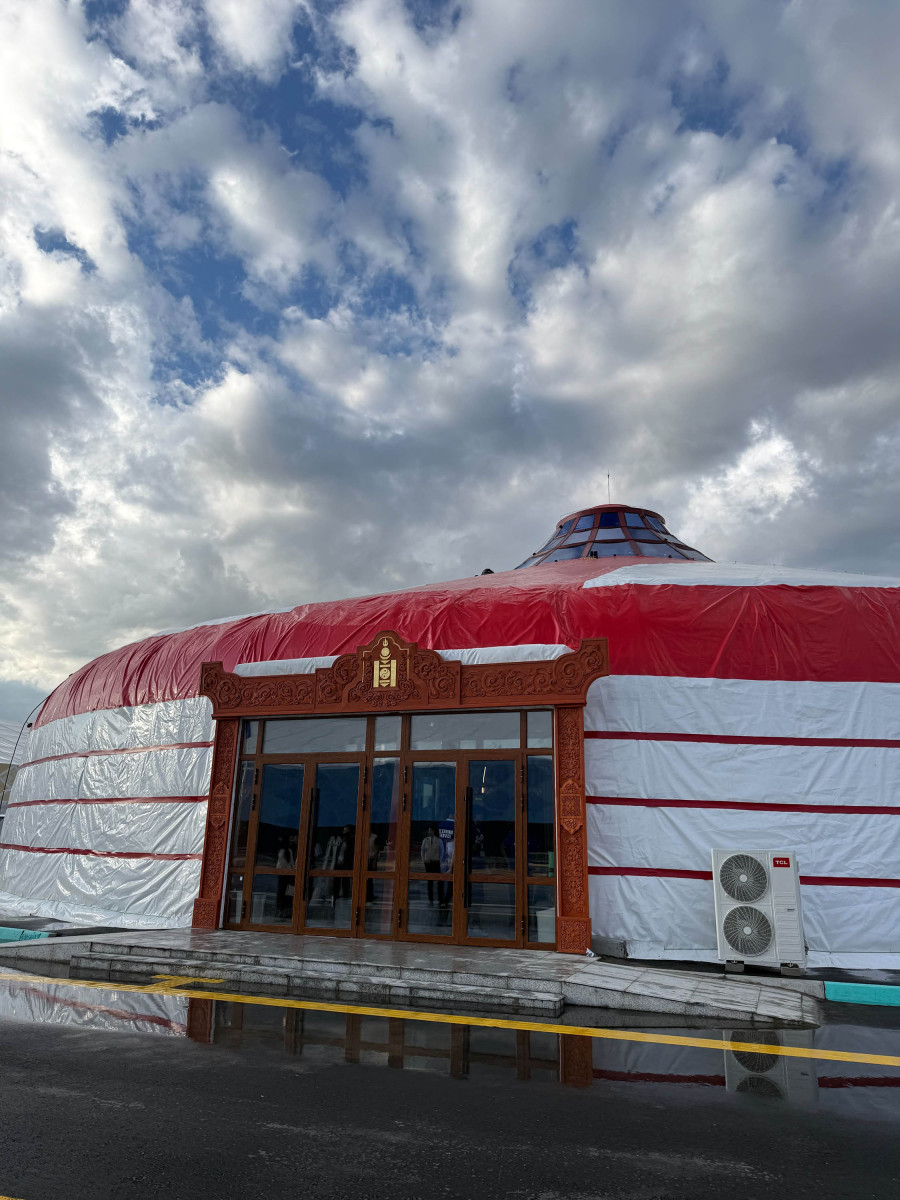
ULAANBAATAR, Mongolia — As foreign delegates arrive in Ulaanbaatar for the United Nations COP17 desertification summit, they are being greeted by a record-breaking architectural feat: a giant traditional Mongolian ger spanning 32.9 metres in diameter. The previous record holder was a ger in Inner Mongolia, China with 31.5 metres in diameter in August 2018.
Equivalent in scale to a four-storey building, the colossal structure covers a floor area of 1,095 square metres and reaches a height of 13 metres. Designed to accommodate roughly 1,500 people simultaneously, the hall fuses centuries-old nomadic architectural principles with modern engineering to host key international proceedings.
Constructed in just 44 days (one month and 14 days), the landmark project was spearheaded by engineering firm Ekh Ochirt Hurden LLC.
Ancient symbolism meets modern engineering
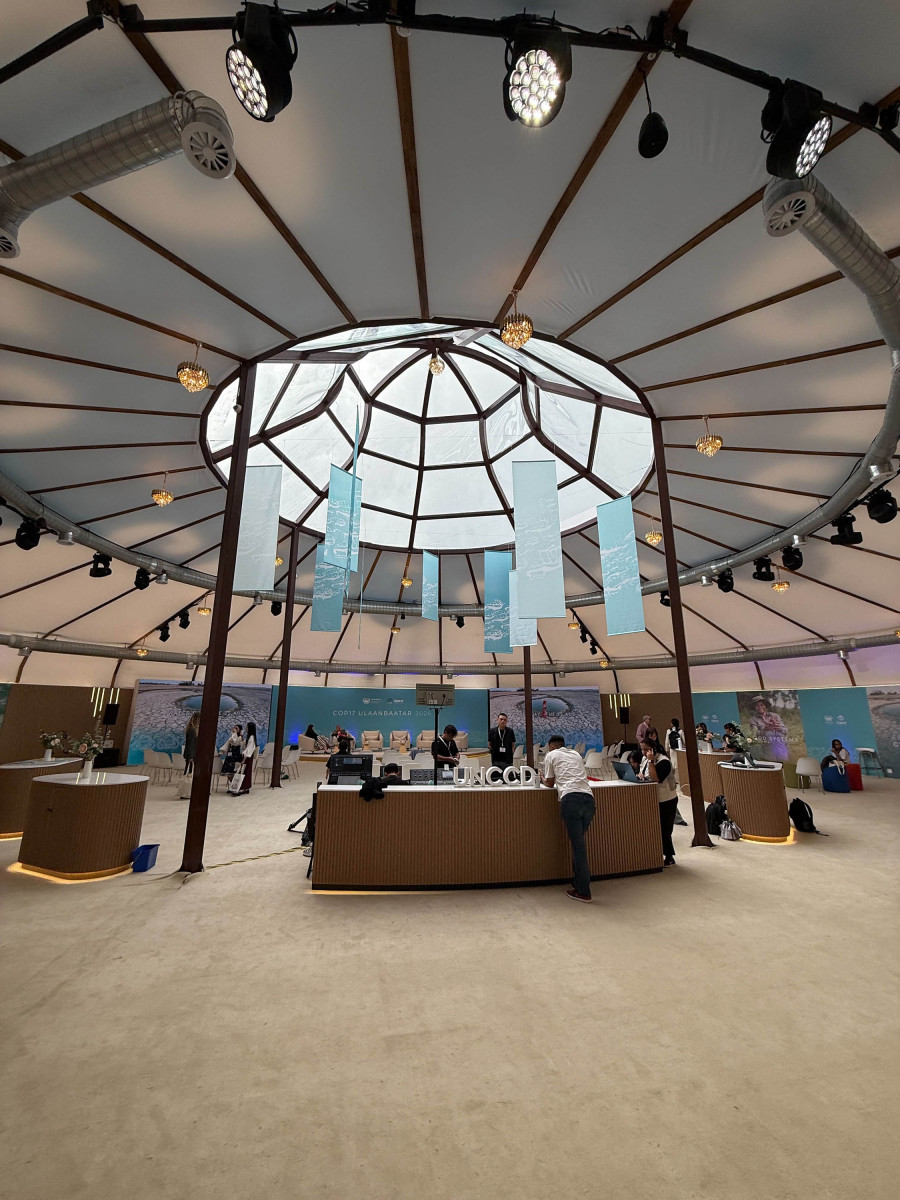
While traditional gers rely on timber support pillars, building a venue on this scale required structural adaptations to handle heavy load capacities and ensure visitor safety. Engineers replaced central wooden supports with reinforced steel framing while preserving traditional decorative carvings and iconic Mongolian design elements inside.
"In my view, this is how Chinggis Khaan's grand imperial palace (Ikh Urgoo) might have felt," said A. Tuguldur, Chief Executive Officer of Ekh Ochirt Hurden LLC, who oversaw the project. "The ancient Ikh Khuraldai assemblies were held in immense gers. But beyond the size, our priority was preserving the fundamental structure, spirit, and symbolism of the Mongolian ger."
To maintain air quality and comfort for up to 1,500 delegates, the structure features eight base windows and ten commercial air conditioning units. Interior decorators used nearly 500 metres of white silk to line the vast curved walls.
Round-the-clock labor and historic relics
Bringing the giant structure from blueprint to reality demanded continuous shifts from a team of 180 workers and engineers who managed the process from foundation pouring to final assembly.
"I didn't go home for 72 hours at one point," said Tuguldur, emphasizing that the project was a collaborative effort involving historical research supported by Mongolian historian D.Ulziibaatar. "This wasn't built by a single person or company. It is a work combining the intellect and skill of many people, created with the sole heart of raising Mongolia's profile on the world stage."
Rooted inside the modern venue is a deeply traditional blessing. Placed directly at the toono—the central roof ring symbolizing the portal to the sky—is a sacred ceremonial scarf (khadag) passed down to the lead project engineer from a 105-year-old Buddhist monk.
As COP17 discussions focus on global soil degradation and climate resilience, host nation Mongolia is using its giant central assembly hall as both a functional venue and a vivid symbol of how ancient pastoral traditions can adapt to modern global challenges.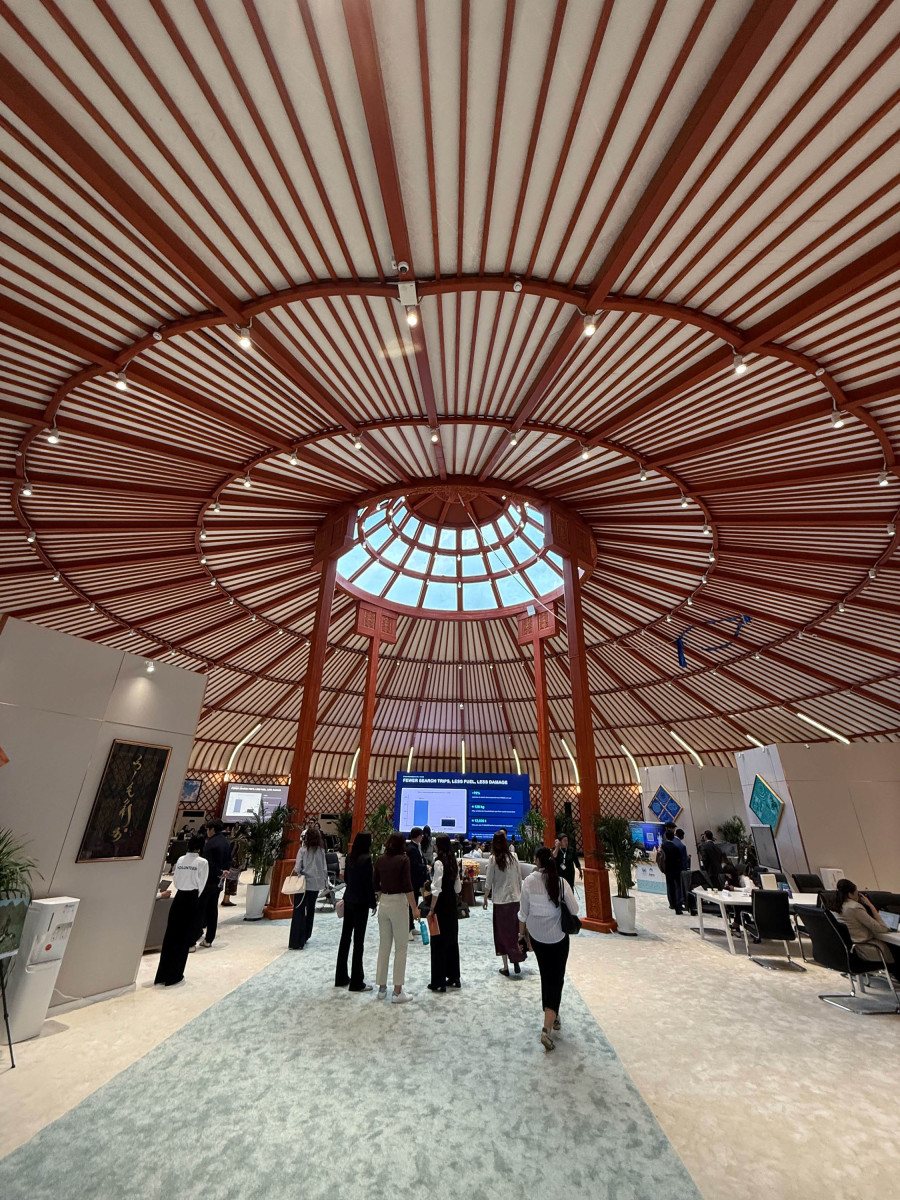
Холбоотой сэдвүүд
Санал болгох





Сэтгэгдэл бичих
Та сэтгэгдэл бичихдээ бусдад хүндэтгэлтэй хандана уу. Ёс бус сэтгэгдлийг Peak.mn сайт устгах эрхтэй.