COP17: Loro Piana CEO Frédéric Arnault Joins UNCCD in Ulaanbaatar, Showcasing Mongolia Cashmere Supply Chain Partnership
 Ч.Сумъяабазар
08 сарын 24, 2026

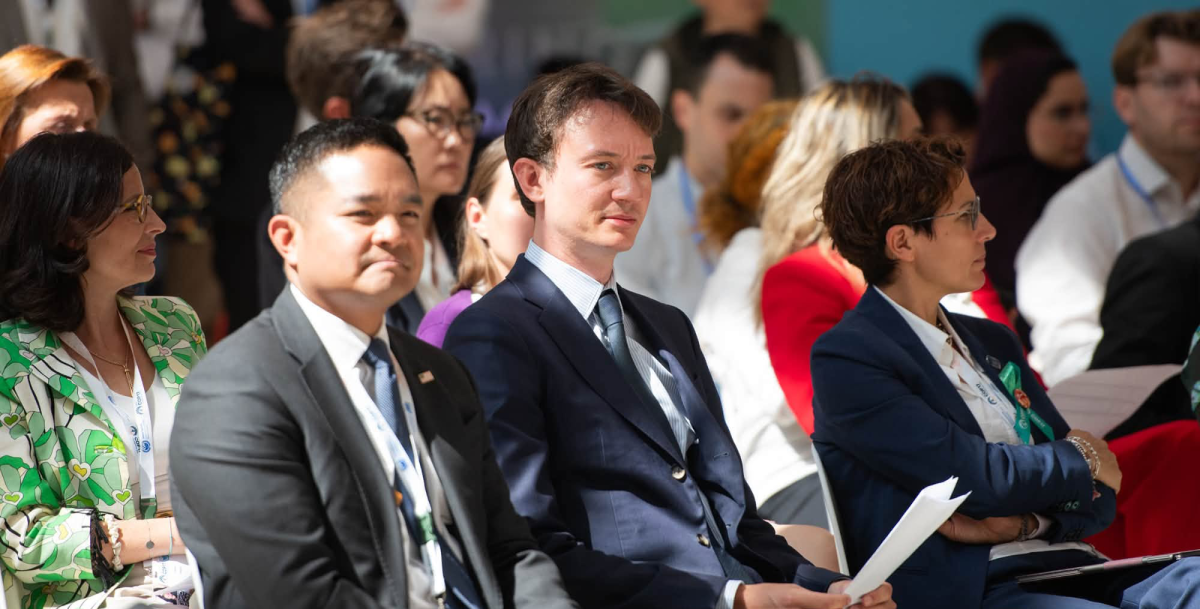
ULAANBAATAR, Mongolia — Frédéric Arnault, Chief Executive Officer of Italian luxury house Loro Piana and heir to the LVMH luxury conglomerate, attended the 17th session of the Conference of the Parties to the United Nations Convention to Combat Desertification (UNCCD COP17) on August 24 in Ulaanbaatar.
Arnault, who assumed the leadership of the LVMH-owned label in June 2025, participated in high-level discussions focused on private sector solutions to land degradation, pasture protection, and sustainable luxury supply chains.
Loro Piana hosted a dedicated side event at the summit titled “Resilient Threads: How to strengthen cashmere supply chains through public-private partnership and the operationalisation of One Health”. The session convened representatives from Loro Piana, LVMH, the Odyssey Conservation Trust, the Sustainable Fibre Alliance (SFA), Mongolian state ministries, local herder cooperatives, and international organizations including UNCCD, UNESCO, and the World Organisation for Animal Health (WOAH).
Four Decades of Cashmere Partnership and Local Processing
Loro Piana’s engagement in Mongolia spans more than 40 years, centering on sourcing high-grade raw cashmere from local herding communities. Mongolia serves as a cornerstone of the brand’s global supply chain, with Loro Piana operating a dedicated primary processing facility in Ulaanbaatar.
The Ulaanbaatar plant carries out initial cashmere sorting and primary processing on-site before the fibers are sent to Italy for fine textile manufacturing, ensuring localized value addition while maintaining strict quality control.
Arnault highlighted Loro Piana’s long-term sourcing philosophy, which mirrors the brand’s regional development programs in Peru and New Zealand. By providing sustained support to raw material suppliers across the globe, the brand aims to strengthen local capacity while securing high-quality natural fibers over the long term.
Reviewing Two Years of the ‘Resilient Threads’ Initiative
At the COP17 gathering, stakeholders presented the two-year progress of the “Resilient Threads” program. Launched in 2025 as a five-year commitment running through 2028, the initiative operates across five soums in Sukhbaatar province—a region in eastern Mongolia highly vulnerable to desertification and climate stress.
The program focuses on protecting biodiversity across the Eastern Mongolian Steppes, one of the world's last intact grassland ecosystems, while reinforcing supply chain resilience and supporting pastoral livelihoods.
Designed in collaboration with Mongolian state institutions, local authorities, and herder cooperatives, the initiative aligns with national economic, environmental, and social equity objectives. Extensive field research guided the identification of regional priorities and management strategies.

Operationalizing the ‘One Health’ Approach
During the COP17 session, Arnault, government leaders, and international representatives evaluated practical requirements for implementing the "One Health" framework—an integrated approach recognizing the interconnected health of people, livestock, and ecosystems.
Panel discussions centered on the role of public-private partnerships in preventing rangeland degradation while maintaining economic security for herding communities. Speakers emphasized that multi-stakeholder coalitions involving luxury brands, conservation trusts, and international oversight bodies provide a practical model for scaling sustainable land management across arid grasslands.
Холбоотой сэдвүүд
Санал болгох




Сэтгэгдэл бичих
Та сэтгэгдэл бичихдээ бусдад хүндэтгэлтэй хандана уу. Ёс бус сэтгэгдлийг Peak.mn сайт устгах эрхтэй.